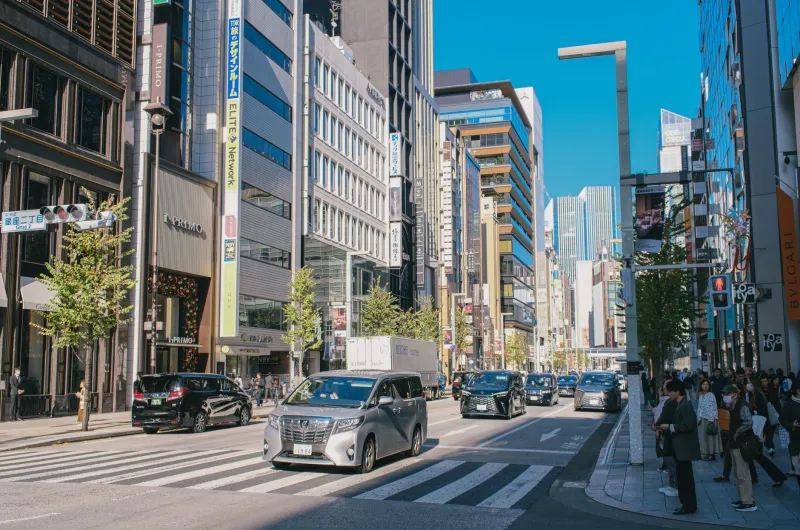
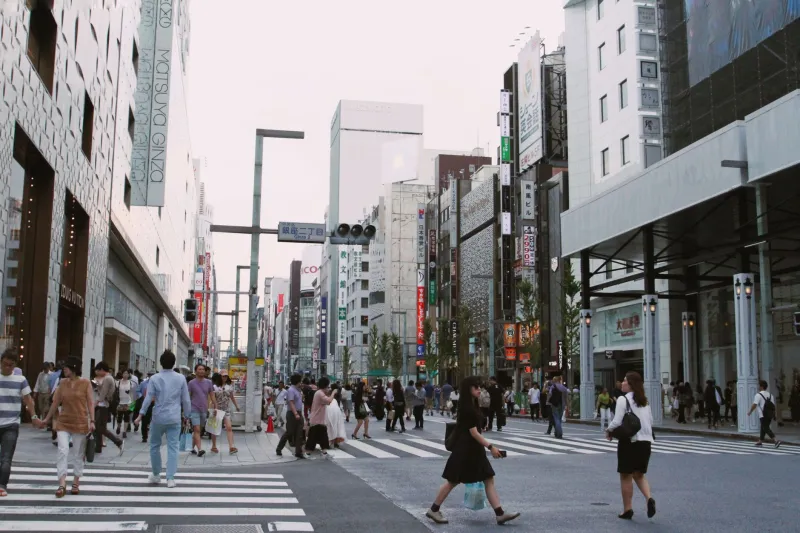
The Decided Woman: How Tokyo's Most Powerful Dressers Turned Repetition Into Authority
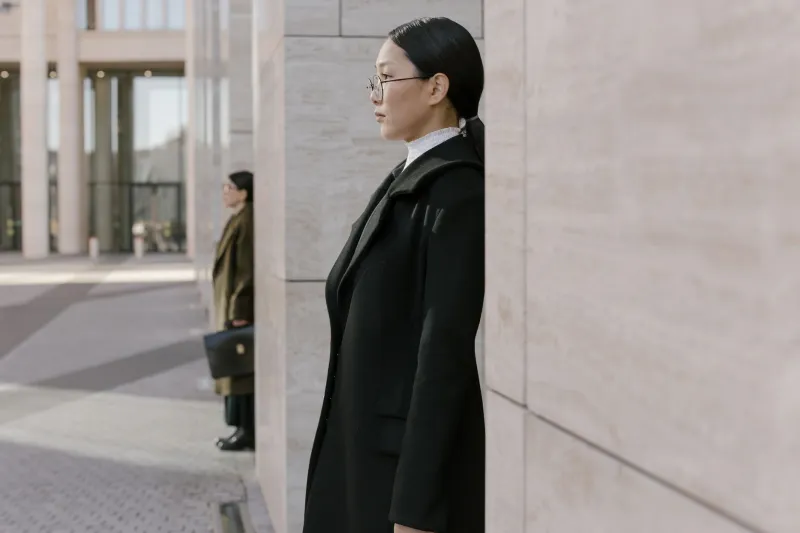
In Ginza's most rarefied professional circles, the highest compliment a woman can receive is that her wardrobe is entirely predictable. Far from a creative failure, this deliberate sameness signals something far more potent than novelty ever could—a mind too occupied with consequential matters to be distracted by the daily theater of self-reinvention.
The concept of the personal uniform is not new. But in the context of Ginza's culture of precision and restraint, it has been elevated into something approaching philosophy. The women who move through Tokyo's most influential boardrooms, galleries, and private salons are not experimenting. They have already decided. And that decision, arrived at through years of discernment, is itself the statement.
What the Uniform Actually Communicates
Western fashion culture has long celebrated the chameleon—the woman who arrives at Monday's meeting in structured minimalism and Thursday's lunch in something unexpectedly bold. The implicit message is one of range, of versatility, of a personality too dynamic to be contained by a single aesthetic. In Ginza, this restlessness reads differently. It can suggest uncertainty. A woman who has not yet determined who she is.
The Ginza uniform operates on an entirely different logic. When a senior executive at a respected Tokyo firm wears the same silhouette—perhaps a precisely cut wool coat in charcoal, a silk blouse of near-identical ivory, and a single structured bag—day after week after season, she is not failing to express herself. She is expressing herself completely. The uniform becomes a visual signature so consistent that it precedes her reputation. Others know what to expect, and in that expectation lies a quiet, unassailable authority.
This is not mere aesthetics. It is communication strategy rendered in fabric and form.
The Science Behind the Decision
American executives have increasingly taken note of what cognitive researchers have long understood: decision fatigue is real, cumulative, and insidious. Every choice—from what to eat for breakfast to which proposal to greenlight—draws from the same finite reservoir of mental energy. By the time a professional reaches her most consequential decisions of the day, she may have already depleted her sharpest judgment on smaller, ultimately irrelevant ones.
The late Steve Jobs became perhaps the most cited Western example of uniform-dressing as cognitive strategy, famously wearing the same black turtleneck and jeans as a means of eliminating what he considered a trivial daily negotiation. But the women of Ginza arrived at this conclusion not through productivity optimization literature, but through a cultural inheritance that has always placed the quality of presence above the performance of variety.
In eliminating the morning wardrobe decision entirely, these women do not merely save minutes. They preserve a particular quality of mental clarity—one that, by midday, translates into sharper instinct, more decisive leadership, and a composure that colleagues and competitors find difficult to unseat.
Curation as the Prerequisite
It would be a mistake to conflate the Ginza uniform with mere simplicity or, worse, indifference. The personal uniform is not arrived at quickly. It is the product of years—sometimes decades—of rigorous self-study. A woman must understand her proportions with unusual precision. She must know which fabrics honor her posture and which betray it. She must have developed enough taste to recognize, with finality, what is merely fashionable and what is genuinely hers.
The boutiques of Ginza understand this process intimately. The most respected among them do not traffic in trends. They serve women who arrive already knowing what they need—women who have long since moved past the seductive noise of seasonal collections and arrived at something quieter and more durable. The relationship between these women and their chosen pieces is not transactional. It is curatorial. Each acquisition is a confirmation of an identity already established, not an exploration of one still being assembled.
This is why the Ginza uniform is, paradoxically, one of the most demanding wardrobe disciplines to achieve. It requires the kind of self-knowledge that most wardrobes are, in fact, designed to avoid confronting.
The American Adoption, Quietly Underway
Across New York, Chicago, and Los Angeles, a particular kind of high-achieving woman has been arriving at a similar conclusion—though often through a different door. She may have started with the capsule wardrobe trend, or with a stylist who pushed her toward investment pieces. But somewhere along the way, the logic deepened. The question shifted from What should I wear this week? to Who am I, precisely, and how do I make that visible without negotiation every morning?
The women who have crossed that threshold describe the experience in remarkably consistent terms: relief, followed by a kind of confidence that surprises even them. When there is nothing to decide, there is nothing to doubt. They walk into rooms already settled, already whole—and that settledness is perceived, often unconsciously, by everyone in the space.
The influence of Japanese aesthetic discipline on this shift is rarely named directly, but it is present. The principles that govern the Ginza approach—ma, the Japanese concept of meaningful negative space; wabi, the beauty of the understated; the deep respect for quality over accumulation—are precisely the principles that underpin the most effective personal uniforms, whether their wearers know their origins or not.
Choosing the Uniform That Chooses You
For those drawn to this approach, the first and most important step is not shopping. It is stillness. The Ginza method demands a period of observation before acquisition—a careful audit not of what one owns, but of what one consistently reaches for, what one feels most completely oneself wearing, and what has endured across seasons without diminishment.
From that audit, a shape begins to emerge. A palette. A silhouette preference. A recurring texture. These are not arbitrary preferences but the fingerprints of a genuine aesthetic identity, and they deserve to be honored with pieces of corresponding permanence—garments and accessories built to last not a season but a decade, chosen from makers who share the same commitment to longevity over novelty.
The Ginza uniform is, at its core, an act of profound self-respect. It says: I know who I am. I have decided. And I have no interest in performing otherwise.
In a culture perpetually seduced by reinvention, that declaration may be the most radical statement a woman can make with her wardrobe. And in Ginza's considered view, it is also the most elegant.