Desire by Design: How Ginza's Culture of Deliberate Scarcity Rewires the American Luxury Mind
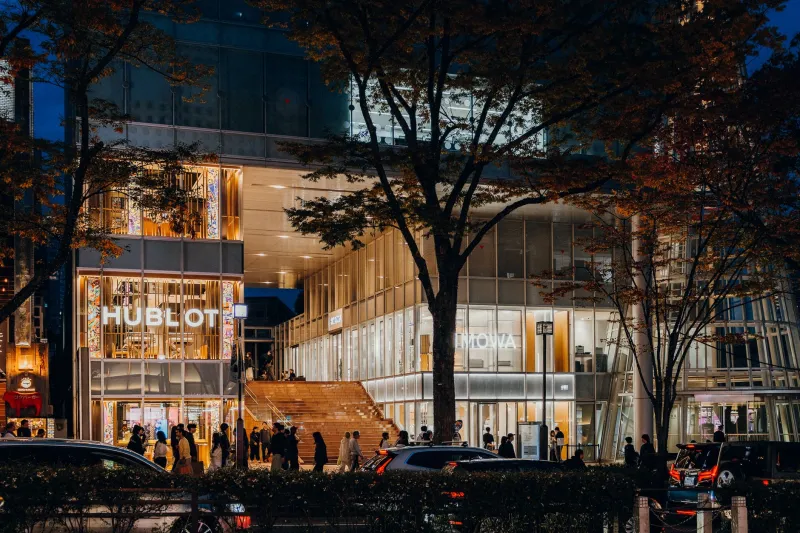
There is a particular kind of frustration that Ginza's most discerning shoppers have learned to reinterpret as reverence. You arrive at a boutique on Chuo-dori, having researched the piece for months. The salesfloor is spare. The item you came for is not available — not out of mismanagement, but by design. You leave with nothing in hand and, paradoxically, a deeper conviction that you must eventually own it.
This is the Ginza paradox. And it is quietly reshaping how American luxury consumers think about acquisition, loyalty, and the meaning of a purchase.
The Oversaturation Problem American Luxury Created for Itself
For much of the past two decades, American retail operated on a logic of maximalism. More SKUs, more colorways, more flash sales, more limited-edition collaborations that were, in practice, neither limited nor particularly special. The result was a luxury market that trained its own clientele to wait for discounts, to treat desire as disposable, and to move on quickly when the next novelty arrived.
The consequences are visible in brand erosion across categories. Handbag lines that once commanded reverence now sit on outlet shelves. Watchmakers that flooded wholesale accounts now struggle to reclaim the perception of exclusivity they spent decades building. When everything is available to everyone at all times, the concept of aspiration collapses under its own weight.
Ginza never made this mistake — or rather, it made it briefly in the bubble economy years and learned an enduring lesson from the aftermath.
What Ginza Actually Means by Unavailability
It would be reductive to describe Ginza's approach to scarcity as mere inventory management. The boutiques and ateliers that define this district's reputation operate with a philosophy closer to what might be called intentional withholding — a deliberate calibration of supply that has less to do with production constraints and far more to do with the psychology of sustained desire.
A Tokyo-based accessories designer whose pieces have attracted a dedicated following among American buyers releases new work in quantities that guarantee waitlists. This is not because the atelier lacks capacity. It is because the designer understands, with a clarity that many Western brands have only recently begun to grasp, that the waiting period is itself part of the product experience. The anticipation, the research, the eventual acquisition — these form a narrative arc that transforms a purchase into something closer to an event.
American consumers who have encountered this model consistently report the same phenomenon: pieces acquired through effort feel categorically different from those clicked into a cart at midnight. The emotional investment made during the waiting period transfers directly onto the object itself.
The Psychology Behind the Pull
Behavioral economists have a name for the principle at work here: reactance. When access to something is restricted, the perceived value of that thing increases — not because its intrinsic qualities have changed, but because the human mind equates difficulty of access with worthiness of pursuit. This is not a manipulation. It is a fundamental feature of how desire operates.
Ginza's most sophisticated brands leverage this instinct without exploiting it. The distinction matters. Exploitation looks like artificial hype cycles, manufactured drops, and algorithmic urgency. What Ginza's enduring houses practice is something quieter: a consistent refusal to chase volume, communicated not through marketing campaigns but through behavior sustained over years and decades.
When an American shopper discovers that a particular Ginza atelier has a six-month waitlist and does not advertise on social media, the response is rarely frustration. It is, more often, a recalibration of attention. The brand's restraint reads as confidence — as evidence that it has never needed to compete for notice because its work has always been sufficient to generate its own gravity.
Commitment as a Luxury Signal
There is a secondary effect worth examining: the way scarcity-driven acquisition reshapes the buyer's relationship to their own wardrobe. American consumers who have navigated Ginza's culture of deliberate unavailability — whether in person in Tokyo or through the small number of stateside stockists who carry these houses — frequently describe a shift in how they approach fashion more broadly.
Owning a piece that required genuine effort to acquire changes the terms of ownership. These are not items that get cycled out at the first sign of trend fatigue. They accumulate meaning with wear. They become the anchors of a wardrobe rather than its seasonal decoration. In this sense, Ginza's scarcity model does not merely sell objects — it sells a different relationship to objects.
For American luxury consumers who have grown weary of the disposability that mass-market and even mid-luxury brands have normalized, this represents something genuinely novel: a purchase that feels final in the best possible sense. Not a placeholder for the next thing, but the thing itself.
Why American Brands Are Finally Paying Attention
The influence of Ginza's restraint philosophy is detectable, if still nascent, in how certain American luxury houses have begun to restructure their distribution strategies. Flagship-only releases, reduced wholesale footprints, and the quiet discontinuation of outlet channels are all signals of an industry beginning to understand that accessibility and desirability exist in tension.
What remains harder to replicate is the cultural patience that underlies Ginza's model. Japanese luxury brands did not arrive at deliberate scarcity through a strategic pivot. They arrived at it through a tradition of craft that was never oriented toward volume in the first place. The waitlist is not a tactic; it is a byproduct of an atelier that produces at the pace its standards require, regardless of demand.
American brands attempting to adopt scarcity as a posture without the underlying craft commitment tend to be seen through quickly. Consumers, particularly at the upper end of the market, have developed a reliable instinct for the difference between a brand that is rare because it is exceptional and one that is merely pretending to be rare.
The Loyalty That Scarcity Builds
Perhaps the most commercially significant aspect of Ginza's unavailability culture is what it produces on the back end: a clientele of unusual loyalty. Shoppers who have waited for a piece, who have researched a house over months, who have made the effort that the brand implicitly requires — these are not casual customers. They are advocates.
In an era when brand loyalty is routinely described as a dying concept, Ginza's model suggests that the problem may not be loyalty itself but the conditions under which it is expected to develop. Loyalty cannot be purchased with a rewards program or manufactured through a loyalty app. It is earned, slowly, by a brand that behaves as though its own standards matter more than its quarterly numbers.
For American luxury consumers navigating a market that too often mistakes noise for prestige, Ginza's paradox offers a clarifying principle: the brands worth committing to are precisely the ones that never asked you to.