Full Price, Full Intention: How Ginza's Boutiques Have Made the Sale Rack Irrelevant
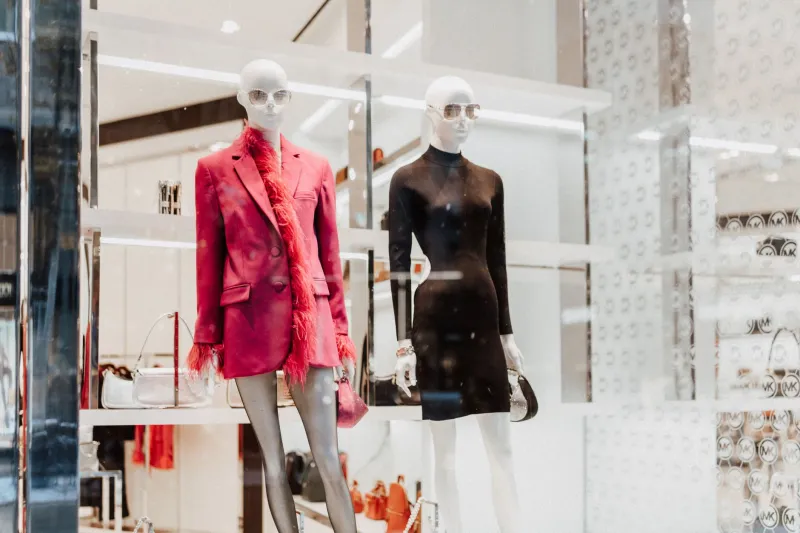
There is a particular silence that descends on Ginza's flagship boutiques in the days following a seasonal transition. The floor plans shift subtly. Certain pieces disappear — not to a crowded sale rail, not to a markdown table near the back — but simply away, recalled with the same quiet dignity with which they arrived. No red tags. No "Final Reductions" banners. No urgent email subject lines promising sixty percent off if you act before midnight.
For the American luxury consumer accustomed to treating end-of-season sales as a kind of sport, this absence is disorienting. For the Ginza retailer, it is simply the point.
The Architecture of Scarcity
To understand why Ginza's most respected boutiques refuse the clearance model, one must first understand how they approach buying in the first place. Where many American department stores operate on volume — ordering broadly and trusting that markdowns will eventually move slow inventory — Ginza's independent and semi-independent luxury houses begin each season with a philosophy of deliberate constraint.
Purchase quantities are considered with almost architectural precision. Buyers at these establishments are not simply forecasting demand; they are constructing a narrative. Each piece admitted to the floor represents a considered position on what the season means, what their particular client values, and what the house itself stands for. When a boutique stocks only twelve units of a given coat, the coat does not need a discount to move. It needs only time and the right customer — and the boutique is patient enough to wait for both.
This restraint is not accidental. It is the product of a retail culture that measures success differently than its American counterpart. In Ginza, a sold-out season with no remaining inventory is not a failure of forecasting. It is, in fact, the ideal outcome.
Why the Markdown Cycle Poisons American Luxury
The American department store model, by contrast, has spent decades training its own customers to distrust full price. Neiman Marcus, Bloomingdale's, Nordstrom — each has, at various points, become so reliant on promotional calendars that their regular-price offerings feel almost like a formality, a placeholder before the inevitable event sale. Savvy American shoppers have internalized this rhythm. They wait. They know the Friends and Family codes will arrive. They have learned, correctly, that patience at full price is rarely rewarded.
The damage this inflicts on brand perception is difficult to overstate. When a luxury handbag appears on a markdown rack, it does not simply become cheaper. It becomes ordinary. The psychological contract between price and prestige — the one that makes luxury meaningful — is quietly voided. Consumers who might have aspired to own that bag at its original price now feel vaguely embarrassed to have paid it. The brand, meanwhile, has surrendered something it cannot easily reclaim.
Ginza's boutiques have watched this dynamic play out in the American market with something approaching concern. The lesson they draw from it is not complex: the moment you teach your customer to expect a discount, you have permanently altered what your product is worth in their mind.
Seasonal Editing as Brand Stewardship
What Ginza practices instead might be described as seasonal editing — a curatorial approach to inventory that treats each transition not as a clearance problem but as an opportunity to reinforce identity. Pieces that do not sell at full price within their designated window are typically returned to the house, held for private client consideration, or quietly retired. What they are not is discounted publicly.
This approach serves multiple functions simultaneously. It protects the perceived value of every piece currently on the floor. It signals to the client that what they are purchasing exists within a finite window of availability. And it reinforces the boutique's own authority as a tastemaker — an establishment that curates, rather than one that simply warehouses goods until someone takes them home at any price.
For the American consumer navigating this environment for the first time, the effect can feel almost pressurized, but in the most elegant possible way. There is no safety net of future discounts. The decision to purchase is a genuine act of commitment, and that commitment is precisely what makes the acquisition feel significant.
The Psychology of the Undiscounted Object
There is a growing body of consumer psychology research suggesting that price stability is itself a form of luxury communication. When an object never goes on sale, it occupies a different category in the buyer's imagination — one associated with permanence, with correctness, with the sense that value has been properly assessed and will not be revised downward. The full-price purchase, in this framework, is not merely a transaction. It is an alignment between buyer and object that discount culture systematically dismantles.
Ginza's boutiques have understood this intuitively for generations. The Japanese concept of monozukuri — the art of making things well — extends naturally into the art of selling things well. A piece deserves to be sold at its proper value, or not at all. This is not stubbornness. It is respect for the craft that produced the object and for the customer discerning enough to recognize it.
American luxury consumers who have spent time in Ginza frequently describe a shift in their own purchasing psychology upon returning home. The promotional emails that once felt like opportunities begin to feel like noise. The sale rack begins to feel like a place where someone else's indecision has accumulated. They find themselves, often to their own surprise, willing to pay full price — not because they have become careless with money, but because they have recalibrated what full price actually means.
What American Retailers Could Learn
The irony of the American luxury markdown cycle is that it costs retailers more than it earns them — not merely in margin erosion, but in the far more expensive currency of brand trust. The boutiques of Ginza offer a viable alternative model, one that requires genuine discipline in buying, genuine confidence in product selection, and a genuine willingness to let a slow season be slow rather than papering over it with promotional urgency.
For the American luxury consumer, the practical takeaway is equally clear. Seek out brands and boutiques that hold their prices — not because they are inflexible, but because they believe in what they have made. Resist the cultural conditioning that equates a discount with a victory. The most sophisticated purchase is rarely the cheapest one. It is the one made with full information, full intention, and the quiet confidence that what you are acquiring was worth exactly what you paid.
In Ginza, that confidence is not a luxury. It is simply the standard.