The Architecture of Always: How Ginza's Most Refined Professionals Dress Beyond the Season
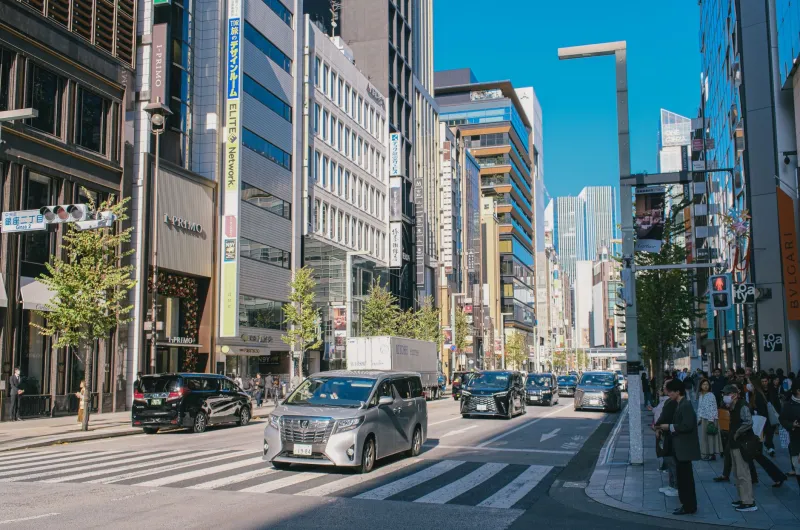
There is a particular kind of confidence that emanates from Tokyo's most polished professionals — a composure that has nothing to do with wearing something new. Walk through Ginza on any given morning, and you will observe men and women dressed with a precision that feels entirely independent of the month on the calendar. Their coats are neither conspicuously autumnal nor aggressively spring-like. Their accessories carry no seasonal allegiance. What they wear simply works, in the most considered sense of the word.
This is not accidental minimalism. It is the product of a wardrobe philosophy that Ginza's stylists and tastemakers have refined over decades — a system built not on trend cycles, but on what might be called material intelligence and layering architecture. And for the American professional, who often finds themselves spending considerable resources chasing a fashion calendar that resets every three months, the Ginza methodology offers something genuinely liberating: a wardrobe that never needs to be reinvented.
The Foundational Principle: Material Before Silhouette
In conversations with Tokyo-based stylists who serve Ginza's executive clientele, one idea surfaces repeatedly: the choice of fabric is the first decision, not the last. Where American dressing culture often begins with silhouette — the wide trouser, the oversized blazer, the fitted sheath — Ginza's approach begins at the fiber level.
"When I work with a client, we talk about weight and hand before we talk about cut," explains one senior stylist whose atelier sits just off Chuo-dori. "A piece in the right material will carry itself through four seasons. A piece in the wrong material will feel wrong in six months, regardless of how beautiful the shape is."
Practically, this means a strong preference for fabrics that perform across temperature ranges: high-twist wool that breathes in July and insulates in January, silk-wool blends that drape with equal elegance over a summer shell or a winter turtleneck, and heavyweight cotton twills that hold structure in humidity and cold alike. These are not compromise fabrics. They are, in fact, the most demanding — and rewarding — choices a wardrobe can contain.
For American professionals building toward this standard, the entry point is straightforward: before purchasing any foundational piece, hold it to the question of whether it can be worn in at least three distinct temperature contexts. If the honest answer is two or fewer, it belongs in a different category of purchase entirely.
The Layering Logic: Building Outward, Not Outward
Ginza's seasonless wardrobe does not achieve its flexibility through accumulation. It achieves it through what Tokyo stylists describe as a layering logic — a deliberate system of proportional relationships between pieces that allows a core set of garments to produce a wide range of dressed outcomes.
The structure, at its most fundamental, operates in three registers: the base, the middle, and the finish. The base encompasses fine-gauge knits, lightweight turtlenecks, and silk shells — pieces with minimal visual weight that regulate temperature without adding bulk. The middle layer is where the wardrobe's primary pieces live: the precisely tailored trouser, the structured blazer, the refined midi skirt. The finish layer — a coat, an unlined jacket, a draped cardigan of exceptional quality — completes the architecture and provides the seasonal adjustment.
What distinguishes the Ginza approach from conventional layering advice is the insistence that each layer must be capable of standing alone with full dignity. A base-layer turtleneck, when the finish layer is removed in a warm conference room, should look entirely intentional. A middle-layer blazer, worn without the base beneath it in August, should require no apology. This demand for individual integrity is what prevents the system from collapsing into the kind of bulky, mismatched layering that seasonal dressing often produces.
"Every piece must be complete," says one Ginza-based wardrobe consultant who has worked with clients across Tokyo's major corporate districts. "Layering is not hiding. It is adding. There is a significant difference."
The American Application: Five Formulas That Work Year-Round
For professionals navigating the varied climates of cities like New York, Chicago, or San Francisco, the Ginza layering system translates with remarkable precision. The following outfit formulas, derived from the methodology above, function across all four seasons with only the addition or subtraction of layers:
Formula One: The Tonal Column. A fine-gauge knit in ivory or warm grey, layered beneath a single-breasted blazer in a complementary tone, worn with a high-rise trouser in the same tonal family. In winter, a camel overcoat finishes the column. In summer, the blazer alone suffices. The visual logic remains consistent regardless of what is added or removed.
Formula Two: The Texture Contrast. A silk shell paired with a structured wool-blend midi skirt. In cooler months, a fitted cashmere cardigan bridges the two. In warmer months, the shell and skirt stand without it. The interplay of textures carries the outfit's interest without relying on seasonal color or print.
Formula Three: The Monochrome Foundation. A head-to-toe composition in a single neutral — black, charcoal, or deep navy — with layering pieces in the same family. This formula benefits most from material variation: matte against sheen, smooth against texture. The seasonal adjustment is purely a matter of weight.
Formula Four: The Structured Softness. A relaxed, wide-leg trouser in a fluid fabric paired with a precisely tailored blazer. The deliberate tension between ease and structure creates visual interest that reads as current in any season. A lightweight duster coat extends the formula into autumn and winter.
Formula Five: The Single Statement Piece. One piece of exceptional quality — a beautifully constructed coat, a refined silk blouse, a pair of trousers with an exquisite drape — anchored by the simplest possible supporting pieces. In Ginza, this is perhaps the most common formula: let one extraordinary thing speak, and let everything else listen.
On Accessories: The Seasonless Anchor
No discussion of the Ginza capsule is complete without addressing accessories, which in this methodology function as the wardrobe's constants rather than its seasonal variables. Where American dressing culture often treats accessories as the primary vehicle for seasonal expression — straw bags in summer, velvet in winter — Ginza's professionals tend toward accessories of such enduring quality and neutral character that they require no rotation.
A single structured bag in a refined leather, maintained with proper care, carries across every formula and every month. A pair of shoes in a silhouette of genuine elegance — not trend-driven, not seasonal in its proportions — anchors any outfit regardless of the calendar. The investment required for this approach is front-loaded and, for many American consumers, initially counterintuitive. But the arithmetic is clear: one exceptional bag purchased once outperforms four adequate bags purchased annually, in both financial and aesthetic terms.
The Deeper Return
What the Ginza capsule ultimately offers is not simply a wardrobe strategy. It is a different relationship with dressing itself — one in which the daily act of getting dressed becomes a matter of considered assembly rather than anxious selection. When every piece has been chosen for its capacity to endure, to layer, and to stand alone with integrity, the wardrobe becomes a stable resource rather than a source of ongoing expenditure and reinvention.
For the American professional who has grown accustomed to the relentless churn of seasonal fashion, this represents a genuine reorientation. It asks more at the point of purchase and returns considerably more over time. It is, in the fullest sense, the Ginza approach: deliberate, refined, and built to remain.