The Power of Repetition: How Ginza's Most Admired Women Dress by Owning One Perfect Thing in Every Color
There is a woman who walks through the Ginza district most mornings in a silhouette that has not changed in years. Her coat is the same architectural cut she wore last autumn, and the autumn before that. What shifts, subtly, is the color — ivory in winter, slate in early spring, a deep forest green when the season turns. She is not a woman who has run out of ideas. She is, by every measure of Tokyo's fashion establishment, a woman who has arrived.
This is uniform dressing as Ginza understands it: not a resignation to monotony, but a declaration of mastery. It is one of the most counterintuitive strategies in the vocabulary of high style, and it is practiced with quiet conviction by some of the most admired women in Japan's most prestigious shopping district. For American luxury consumers accustomed to the rhythm of constant acquisition, it presents a genuinely provocative alternative.
What Uniform Dressing Actually Means
The term can mislead. Uniform dressing, as observed among Ginza's fashion-forward clientele, is not about owning identical clothing or surrendering personal expression. It is the deliberate act of identifying a silhouette, a fabric, or a garment that functions with exceptional precision in your life — and then committing to it across a range of colorways rather than endlessly seeking the next new thing.
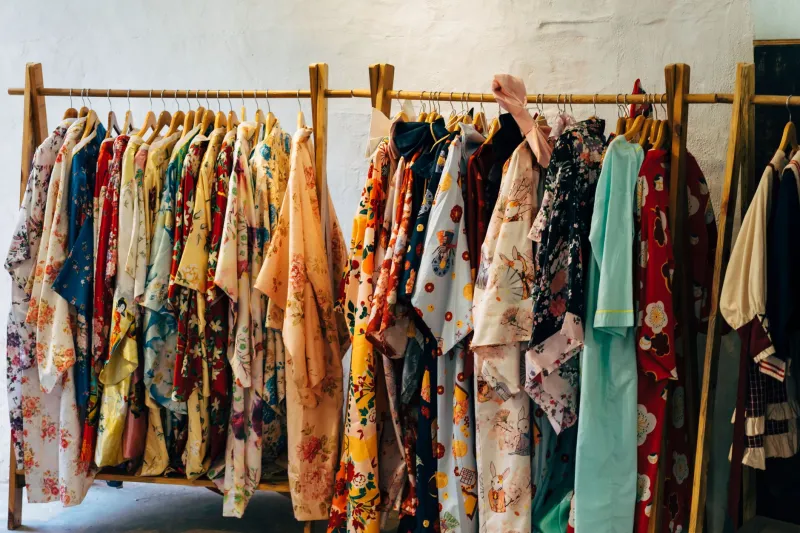
Michiko Tanaka, a personal stylist who has worked with executives and cultural figures in Tokyo for over fifteen years, describes it this way: "When a woman finds the cut that speaks for her, she stops searching. She begins deepening. She buys that blouse in white, in black, in a muted terracotta. Each version is a slightly different conversation, but the grammar is always hers."
The psychology behind this approach is more sophisticated than it first appears. Repetition, in the context of personal style, communicates confidence. It signals that the wearer is not chasing trends but has, instead, resolved something fundamental about who she is and how she wishes to be perceived. In environments where authority matters — boardrooms, client meetings, cultural events — that resolution reads as power.
The Ginza Boutique Perspective
Boutique owners along Chuo-dori have long understood this dynamic, and many have quietly built their inventory strategies around it. Rather than stocking an overwhelming breadth of styles, the most discerning shops curate a narrow range of exceptional pieces in a considered spectrum of color.
"Our clients do not want to be surprised every season," explains the manager of a well-regarded accessories atelier near Mitsukoshi. "They want to be served. When a woman finds the bag that works with her life, she returns for it in cognac, in midnight blue, in a seasonal limited tone. That is loyalty built on trust, not novelty."
This model stands in deliberate contrast to the churn-and-newness rhythm that dominates much of American retail, where the implicit message is that last season's purchase has already been superseded. The Ginza approach suggests something more durable: that the right object, repeated with intention, accumulates meaning rather than losing it.
Why American Wardrobes Struggle With This
For many American luxury consumers, the instinct runs in the opposite direction. The cultural narrative around fashion in the United States has long been oriented toward variety, discovery, and the social currency of being first. Department stores are built around the new arrival. Social media rewards the outfit that hasn't been seen before. The very concept of wearing the same silhouette repeatedly — let alone purchasing it in five iterations — can feel like an admission of defeat.
But stylists who work with high-achieving American clients are beginning to observe a shift. "The women I work with who are most pressed for time and most visible in their careers are actually the most open to this idea," says a New York-based wardrobe consultant who frequently sources pieces from Japanese designers. "They don't want to think about getting dressed. They want to look extraordinary without the cognitive overhead. Uniform dressing solves that problem at the highest level."
The math, once considered, is compelling. Five versions of one exceptional blouse, each worn with frequency and purpose, will almost certainly generate more utility — and more impact — than fifteen different pieces worn once or twice before being relegated to the back of a closet.
Building Your Own Ginza Uniform
The practice begins not with shopping, but with honest observation. The question is not what you wish you wore, but what you actually reach for — repeatedly, instinctively, without deliberation. That piece, whatever it is, is the seed of your uniform.
For some women, it is a particular trouser silhouette that flatters and moves well. For others, it is a structured jacket with clean shoulders, or a fluid blouse in a weight that transitions from morning meetings to evening without effort. The garment itself is less important than the quality of attention you bring to identifying it.
Once located, the investment logic shifts. Rather than allocating a fashion budget across many different pieces, the Ginza approach concentrates resources into a single well-chosen item, acquired across a palette of colors that serve different contexts. A cashmere crewneck in charcoal, in ivory, in a dusty mauve, and in a deep navy represents four distinct expressions of the same considered choice — and a wardrobe foundation that requires almost no additional thought.
Materials, naturally, matter enormously here. When a piece is worn this frequently and occupies this central a role in your daily presentation, quality becomes non-negotiable. This is where Japanese craftsmanship enters the conversation with particular force. The fabrics and construction standards that define Ginza's finest offerings are engineered for exactly this kind of sustained, repeated use — pieces that deepen in character rather than diminishing with wear.
The Deeper Statement
There is something almost philosophical operating beneath the surface of this practice. In a cultural moment saturated with options, the deliberate narrowing of choice — the act of saying this and not the thousand other things — has become its own form of luxury. It communicates that the wearer has done the difficult interior work of knowing herself, and has no need to audition new identities each season.
Ginza's most stylish women are not, by and large, women who are indifferent to fashion. They are deeply engaged with it. But their engagement is vertical rather than horizontal — they go deeper into what works rather than wider across what's available. The result is a presence that registers immediately and lingers long after the room has changed.
For the American professional woman who has built a closet full of beautiful things she rarely wears, that depth is worth considering. The uniform is not a limitation. It is, in the Ginza sense, the most refined decision a wardrobe can make.