The Calculus of Coveted: Why Ginza's Most Extraordinary Pieces Justify Every Decimal Point of Their Price
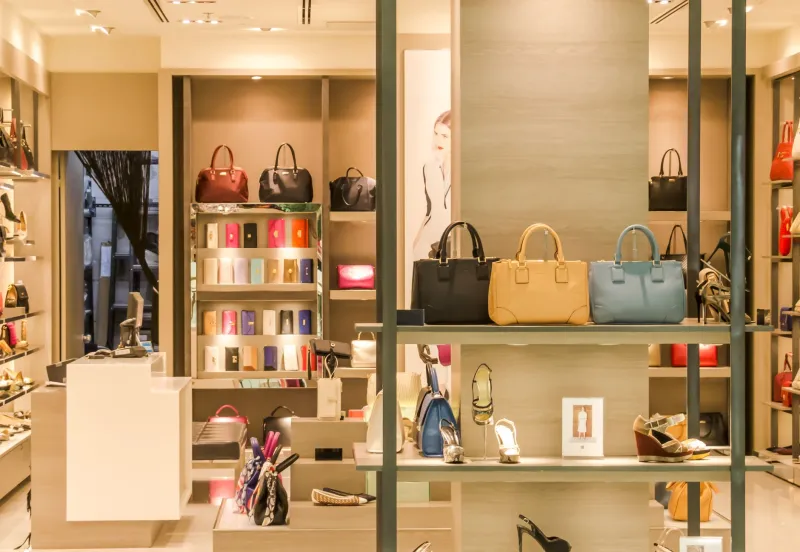
There is a moment, familiar to anyone who has stood inside one of Ginza's most quietly formidable ateliers, when the price tag stops being a number and becomes a question. Not the panicked question—can I afford this?—but the more sophisticated one: what, precisely, am I being asked to understand about value?
For American consumers conditioned by decades of sale cycles, loyalty points, and the seductive mythology of the "good deal," this question can feel disorienting. But for the women and men who constitute Ginza's most discerning clientele—and increasingly, for their counterparts in New York, Chicago, and Los Angeles—the answer is less about financial justification and more about a fundamental recalibration of how luxury is measured.
The Illusion That Mass-Market Luxury Sells
Before examining what genuine luxury costs, it is worth examining what it does not cost—and why that distinction matters.
The American luxury market has, over the past two decades, become extraordinarily skilled at manufacturing the feeling of exclusivity at accessible price points. A $450 leather wallet from a heritage European house. A $1,200 cashmere sweater bearing a logo recognized on every continent. These are not fraudulent products. They are, by most objective measures, well-made. But they operate on a different economy than the pieces occupying Ginza's most rarified display cases.
Mass-market luxury sells aspiration bundled with recognizability. The price is high enough to signal investment, low enough to be replicated across millions of transactions annually. The result is a paradox: an item positioned as exclusive that is, by design, everywhere. The value proposition depends almost entirely on brand perception—a perception that, as any student of fashion cycles knows, is subject to erosion.
Ginza's ateliers operate on an entirely different logic.
The Architecture of Irreplaceable
Consider a structured coat from one of Tokyo's most respected independent designers—the kind of piece that does not appear in seasonal lookbooks, does not circulate on resale platforms, and is not discussed in the kind of publications that publish trend forecasts. Its price may exceed $8,000. In some cases, considerably more.
The American reflex is to compare: for that price, I could have three coats from a European luxury house, or twelve from a premium American retailer. This is precisely the calculus that Ginza's philosophy dismantles.
The coat in question was cut by a craftsperson who has spent thirty years studying the relationship between fabric tension and the human shoulder. Its lining was chosen not for cost efficiency but for the specific way it moves against silk blouses in winter. The silhouette was not designed to reflect a trend but to exist in elegant opposition to trends—a shape that will read as considered and authoritative in a boardroom photograph taken a decade from now.
You are not buying three coats' worth of material. You are buying the permanent elimination of the coat problem from your wardrobe calculus.
Cost Per Year: The Metric That Changes Everything
The most useful framework for understanding Ginza-caliber investment is one that American financial culture applies readily to real estate and automobiles but rarely to clothing: amortization.
A $6,000 accessory worn consistently for fifteen years—a realistic expectation for a well-constructed piece from an atelier that builds for permanence—costs $400 per year of use. A $600 bag replaced every eighteen months, as the churn of trend-driven purchasing typically demands, costs $400 per year as well. The numerical equivalence is almost poetic. But the experiences are not equivalent.
The $6,000 piece does not depreciate in the same psychological register. It does not become a source of low-grade dissatisfaction when a newer version appears. It does not require the ongoing cognitive labor of replacement shopping. It accumulates, instead, a kind of authority—the quiet confidence of an object that was chosen with complete intention and has never given its owner reason to reconsider.
Several of Ginza's most established ateliers report that their longest-tenured American clients—women and men who have been purchasing from them for a decade or more—spend less in aggregate than clients who arrived with larger initial budgets but approached the relationship as a series of trend-responsive transactions. Permanence, it turns out, is economical.
What the Price Is Actually Paying For
When an atelier in Ginza prices a structured leather piece at a figure that prompts genuine pause, the number is not arbitrary, and it is not purely the result of rent in one of the world's most expensive retail districts. It is a transparent accounting of invisible labor.
The hours of pattern refinement that never appear in any product description. The sourcing relationships with material producers who operate at scales too small to supply any brand with a marketing budget. The finishing work performed by craftspeople whose skills exist in a direct, unbroken line from generations of Japanese artisanal tradition. The decision not to produce more units than the workshop can execute without compromise.
American consumers are accustomed to prices that obscure their own derivation—markups applied to justify positioning rather than reflect production reality. Ginza's pricing culture is, in a meaningful sense, more honest. The cost is high because the making is genuinely costly, and the making is genuinely costly because no shortcut was taken.
The Confidence Dividend
There is a dimension of this calculation that resists quantification but demands acknowledgment: the effect of wearing something that was made, without compromise, for permanence.
The professionals who constitute Ginza's most loyal American clientele—partners at law firms, executives at design-forward companies, established figures in finance and academia—describe their relationship with these pieces in language that is almost never about appearance. They speak, instead, about the absence of distraction. About entering a high-stakes meeting without a single conscious thought about what they are wearing, because the question was resolved, completely and finally, at the point of purchase.
This is the confidence dividend, and it has no equivalent in the mass-luxury market. A piece chosen for trend relevance requires ongoing reassessment. A piece chosen for permanence asks nothing further of its owner.
Rationality, Properly Understood
The investment paradox that Ginza's most coveted pieces present to American consumers is, on examination, not a paradox at all. It is a clarity problem—a matter of applying the correct framework to a decision that has been culturally miscategorized as consumption rather than recognized for what it actually is: the acquisition of a permanent, depreciating-slowly, confidence-generating asset.
The car payment comparison, so often invoked to dramatize the absurdity of luxury fashion expenditure, is more instructive than its critics intend. Automobiles are understood, without controversy, as assets that justify significant monthly financial commitment because they provide reliable, repeatable value across years of use. The Ginza atelier piece provides the same reliability, the same repeatable value—and unlike the automobile, it does not require insurance, maintenance, or a parking space in Midtown Manhattan.
The rationality was there all along. It simply required the right vocabulary to become visible.