The Deliberate Wardrobe: How Tokyo's Most Admired Women Transformed Repetition Into Distinction

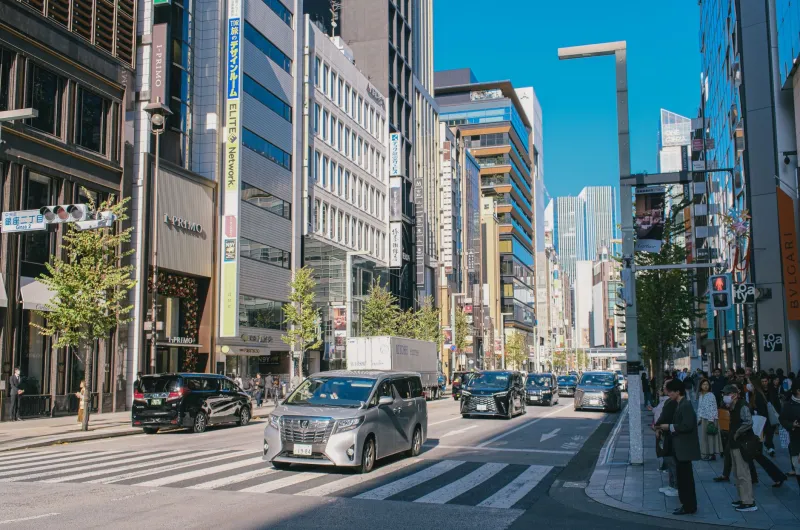
There is a particular kind of confidence that announces itself without volume. You see it in Ginza on a Tuesday morning—a woman in a precisely cut ivory coat, the same silhouette she has worn for years, moving through the arcade of the Itoya building as though the street were arranged around her. She is not chasing the season. The season, one suspects, is chasing her.
This quality—call it stylistic conviction—has long distinguished Tokyo's most admired dressers from their counterparts in fashion capitals more devoted to novelty. While American wardrobes are frequently organized around acquisition and rotation, Ginza's most elegant women tend to operate on an entirely different logic: the logic of refinement through constraint.
The Principle of the Chosen Few
At the heart of this approach is a deliberate narrowing of aesthetic options. Where the conventional wisdom of fashion encourages breadth—more colors, more silhouettes, more seasonal updates—Tokyo's most iconic dressers have historically built their identities on radical reduction.
Consider the late Rei Kawakubo's personal aesthetic, which for decades has orbited the same dark, deconstructed vocabulary. Or Yohji Yamamoto's own wardrobe, which functions as a kind of wearable thesis statement: black, asymmetrical, architectural, unwavering. These are not people who ran out of ideas. They are people who chose their ideas with such precision that repetition became a form of mastery.
The concept extends well beyond the designer class. In Ginza's independent ateliers—the kind of small, appointment-only spaces that occupy upper floors above the main boulevard—stylists and long-term clients speak openly about what they call a "palette commitment." A woman selects three or four tones that genuinely belong to her, and she builds everything around them. Not because she cannot afford alternatives, but because she has decided that coherence is more powerful than range.
What Constraint Actually Produces
The psychological dimension of this practice is worth examining carefully, because it runs counter to a deeply embedded American belief: that more choices produce better outcomes.
Research in decision science has consistently suggested otherwise. The phenomenon known as choice overload—documented by psychologists including Barry Schwartz in his widely cited work on the paradox of choice—indicates that an excess of options often produces anxiety rather than satisfaction. Tokyo's fashion culture, perhaps intuitively, arrived at a similar conclusion decades ago.
When a woman commits to a consistent silhouette—say, a high-necked, column-line dress in muted tones—she stops spending cognitive energy on what to wear and redirects it entirely toward how to wear it. The subtleties emerge: the precise placement of a single piece of jewelry, the way a sleeve is turned back, the deliberate choice of a bag that echoes rather than matches. These are the details that make a style truly legible. They are only visible when the background noise of variety has been removed.
In Ginza boutiques, this philosophy is actively encouraged. Sales associates at houses like Issey Miyake's Ginza flagship do not push clients toward the full range of a collection. They ask questions. They observe. They suggest a direction and then help the client deepen it—season after season—rather than redirecting her elsewhere.
Building a Recognizable Aesthetic: A Framework for American Dressers
For American readers accustomed to a retail culture that prizes newness, the Ginza approach requires a genuine recalibration of expectations. But the practical framework is accessible to anyone willing to begin.
Start with a color audit, not a color purge. Rather than clearing out your wardrobe in a single dramatic gesture, spend two weeks noting which colors you actually reach for when you are not thinking about fashion. These instinctive choices—the charcoal gray you put on for important meetings, the deep navy that appears in three different forms—are the raw material of your palette. They already exist. They only need to be acknowledged.
Identify your structural preference. Tokyo's most consistent dressers tend to have a single silhouette vocabulary: they know whether they are drawn to volume at the shoulder or at the hem, whether they prefer clean vertical lines or softly draped curves. American dressers often mix these vocabularies indiscriminately, which produces what stylists sometimes call "visual noise." Choosing one structural direction and committing to it does not mean wearing the same cut every day. It means that every piece you own shares a point of view.
Invest in repetition rather than variety. This is perhaps the most counterintuitive step. When you find a fabric, a maker, or a silhouette that genuinely works for your life and body, acquire it in depth rather than breadth. The woman in Ginza who owns the same impeccably cut trousers in four different weights—summer wool, autumn flannel, winter crepe, spring linen—is not lacking imagination. She has made a considered decision that this particular shape is correct, and she is building a wardrobe of real utility around that decision.
Why This Matters Now
The timing of this conversation is not incidental. American consumers are experiencing what might be described as a collective fatigue with trend culture—a growing skepticism toward the machinery of fast fashion and its seasonal demands. The interest in Japanese luxury that has accelerated over the past several years is not merely aesthetic. It reflects a deeper hunger for a different relationship with clothing altogether.
The Ginza uniform, properly understood, is not a uniform at all. It is the visible evidence of a woman who has done the internal work of knowing herself—her proportions, her context, her values—and translated that knowledge into something you can see from across a room. It is the opposite of fashion as performance and the fullest expression of style as identity.
That is a distinction worth making. And it is one that Ginza has been making, quietly and precisely, for a very long time.