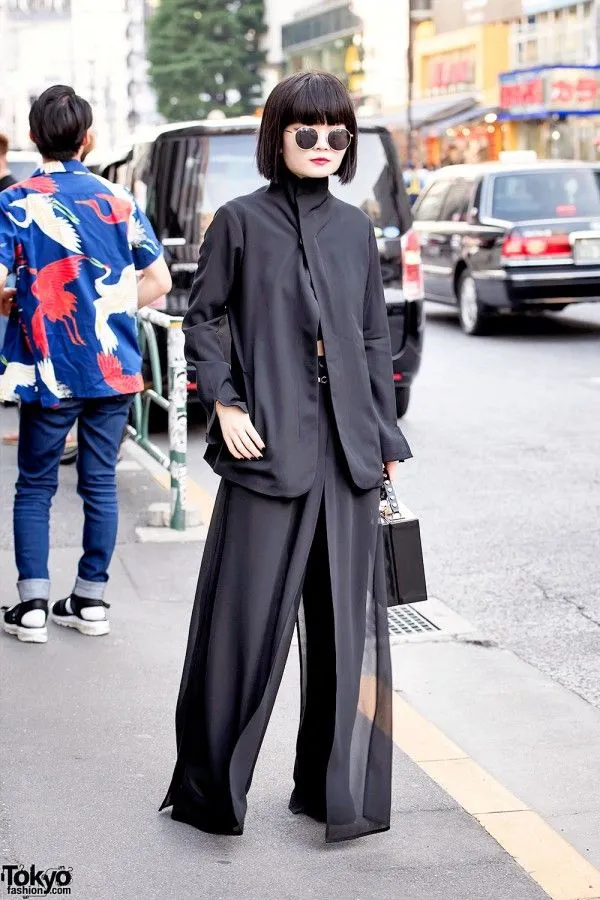
Structural Statements: How Japanese Designers Are Transforming Accessories Into Wearable Architecture

Photo by Photo by sheilabox on Unsplash on Unsplash
Consider the object before you consider its function. This is, in essence, the operating principle behind a quiet revolution currently reshaping the luxury accessories landscape — one that originates not in Milan or Paris, but in the ateliers and workshops of Japan, many of them connected in spirit, if not always in geography, to the exacting aesthetic culture of Ginza.
The American luxury market has long been fluent in European accessory codes: the Italian leather house, the French maison with its instantly recognizable hardware, the monogram that announces provenance before the piece is even fully visible. What it is only beginning to absorb is a fundamentally different grammar — one in which the accessory does not announce itself but rather reveals itself, slowly and on its own terms.
When Engineering Meets Adornment
The most significant shift Japanese designers have introduced to the accessories conversation is methodological. Where European luxury has traditionally approached the accessory as an object of decoration — beautiful, yes, but primarily communicative of status — Japanese makers tend to begin with a structural question. How does this piece behave? What happens to its form under tension, weight, or movement? How does it interact with the body not as a surface but as a three-dimensional, kinetic presence?
This is not merely philosophical. It produces tangible differences in the finished object. A Japanese-designed belt, for instance, may be constructed from a single continuous piece of vegetable-tanned leather with no visible stitching, its edges beveled to a degree that transforms the profile from utilitarian strip to considered line. The hardware — if there is any — tends to be recessed, integrated, or absent entirely, replaced by a fastening mechanism derived from traditional Japanese joinery rather than Western metalwork conventions.
The result is an object that reads as minimal but rewards close examination with extraordinary complexity. This is the central paradox — and the central achievement — of Japanese accessory design at its finest.
Materials as Manifesto
Japanese designers have also distinguished themselves through an unconventional relationship with materials — one that simultaneously honors tradition and refuses to be constrained by it. While European luxury houses have largely standardized around a canon of prestige materials (calfskin, crocodile, 18-karat gold), Japanese makers have expanded the vocabulary considerably.
Washi paper, traditionally used in bookbinding and screen construction, has been transformed through lamination and resin treatment into a material of surprising structural rigidity, used in clutch construction and jewelry settings. Urushi lacquer — a technique with more than a thousand years of Japanese history — is being applied to metal jewelry components and bag hardware, producing surfaces of extraordinary depth that shift in appearance under different light conditions. Kudu leather sourced through ethical partnerships, indigo-dyed textiles treated with shibori resist techniques, and titanium alloys typically associated with aerospace manufacturing have all found their way into the accessory collections of designers working within this tradition.
What unifies these choices is not novelty for its own sake. Each material selection is made in response to a specific structural or aesthetic problem. The designer asks: what does this piece need to do, and what material is most honestly suited to that purpose? This question-first methodology produces accessories that feel inevitable rather than arbitrary — as though they could not have been made any other way.
The American Market's Evolving Appetite
For years, the conventional wisdom held that American luxury consumers required legibility above all else — a recognizable logo, a familiar silhouette, a clear signal of investment. That calculus is changing, driven in part by a generation of buyers who came of age during a period of significant aesthetic diversification and who have grown skeptical of the loudest signals.
What this emerging cohort of American luxury consumers is seeking, increasingly, is the kind of quiet authority that Japanese accessories offer in abundance. A bag that draws comment not because it broadcasts its origins but because something about its proportion or material stops a knowledgeable eye. A bracelet whose weight and finish communicate craftsmanship without requiring authentication from a logo. A pair of earrings whose form is so precisely resolved that they function as miniature sculptures.
This is not a niche interest. Stylists dressing clients for award seasons and editorial shoots in New York have noted a marked increase in requests for Japanese-origin accessories — pieces that photograph with unusual depth and that hold their own against even the most elaborate garments without competing for dominance. The accessory that knows how to be in the room without controlling it is, it turns out, exactly what the American market has been searching for.
Case Studies in Contrast: Pieces That Speak Both Languages
The accessories most successfully bridging Japanese precision and Western boldness tend to share certain characteristics. They are, first, unambiguous in their formal intention — there is no confusion about what the designer was attempting. Second, they carry a scale or material presence that reads confidently in American contexts, where accessories are expected to contribute meaningfully to an overall statement. Third, they reward the kind of sustained attention that distinguishes a collector from a consumer.
A structured tote constructed from waxed canvas with hand-hammered brass rivets at stress points exemplifies this balance: the construction is Japanese in its rigor, the scale and material confidence are legible to a New York sensibility. A wide cuff bracelet in oxidized silver, its surface textured through a process derived from traditional Japanese metalsmithing but its silhouette boldly architectural, operates in the same register.
Jewelry, in particular, has become a site of remarkable innovation. Rings designed with the proportional logic of building components — interlocking elements that can be reconfigured — bring a playfulness to Japanese precision that American buyers find immediately engaging. The piece is serious in its making and joyful in its wearing. This combination, rarer than it should be in luxury jewelry, is something Japanese designers have achieved with notable consistency.
The Architecture of Investment
To acquire a Japanese-designed accessory at the level of quality this conversation describes is to make a different kind of investment than the European luxury market typically offers. You are not buying a symbol of a house's heritage, though that heritage may be considerable. You are buying a resolved object — something that has been thought through completely, made with materials chosen for purpose rather than prestige alone, and constructed to improve in character rather than diminish in presence over time.
For the American buyer willing to recalibrate their criteria — to ask not "what does this signal?" but "what does this do, and how beautifully does it do it?" — Japanese accessories represent one of the most compelling propositions in contemporary luxury. The architecture is already there. The only question is whether you are ready to move in.