The Permanent Residents: A Nine-Object Audit for the Everyday Bag

Photo: luxury handbag contents flat lay marble card case folded scarf compact mirror, via img.freepik.com
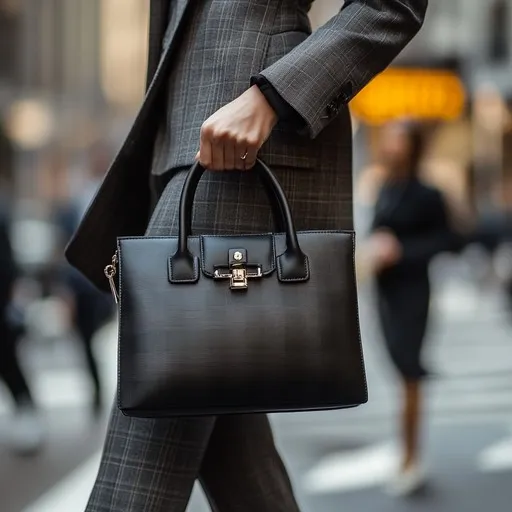
In Ginza, the handbag is treated as a small private architecture. It has walls, thresholds, and a purpose. The question is rarely what the bag can hold; it is what deserves to live there. That distinction explains why a Ginza shopper can carry a compact bag through a full day of appointments, errands, and dinner without the familiar American scramble at the register. The bag is not fuller of things. It is fuller of intention.
The following nine objects are the permanent residents—the pieces that earn their place not by being useful once, but by being useful daily. The exercise is not a shopping list. It is an audit. Empty your bag tonight, lay every item on a table, and ask which objects actually support the person you are trying to be. For most of us, the answer is fewer than we expect.
The Case for Subtraction
Most American shoppers respond to an overstuffed bag by buying a larger one. The result is a heavier carry and the same daily friction, only redistributed. Ginza's approach is the opposite: keep the bag, reduce the contents, and let the interior become legible again. A bag that closes easily, opens without resistance, and yields the right object on the first reach is not a luxury of space. It is a luxury of editing.
At Folli Follie Ginza, the handbags are designed with this discipline in mind—clean interiors, considered pockets, hardware that does not fight the hand. But no design can compensate for a carry that has never been curated. The nine objects below are a practical starting point for the 2026 wardrobe, and for the American professional life that moves between office, train, and evening without a chance to repack.
The First Three: Identity and Access
One: a slim card case. The card case replaces the bulky wallet and forces a decision about what is actually needed: identification, one or two payment cards, a transit card, perhaps a business card. It sits flat in the hand, slips into a pocket, and eliminates the receipts that otherwise accumulate like sediment. In Ginza, the card case is often the most personal object in the bag—quiet, tactile, and used dozens of times a day.
Two: the phone. This is obvious, but the point is the phone without the accessories that multiply around it. A bulky battery case, a second cable, and a tangle of adapters turn a tool into a small搬家 project. The phone earns its place; the ecosystem around it must justify itself separately.
Three: keys on a slim ring. A large keyring with loyalty fobs and decorative charms is a residue of another era. A slim ring keeps the essential keys together and prevents the bag's interior from becoming a nest of metal. The sound matters, too: a quiet bag is a composed bag.
The Next Three: Composure in Public
Four: a folded scarf. The scarf is the most versatile object on the list. It handles aggressive air-conditioning, a sudden chill, a restaurant that is colder than expected, or a meeting that requires a small gesture of polish. Folded neatly, it takes up less space than a paperback and can remain in the bag for weeks without becoming clutter.
Five: a compact mirror. Not a vanity item, but a tool of readiness. A small mirror allows a discreet check before a meeting, after a commute, or between appointments. It belongs in a slim case or pocket, not loose among keys.
Six: one lip color. One, not three. The American habit of carrying a rotating cast of lip products is a small but persistent source of clutter. Choose the shade that works with the day's wardrobe and leave the rest at home. The same logic applies to powder, perfume, and hand cream: one of each is a decision; several is a postponement.
The Final Three: Readiness Without Clutter
Seven: a handkerchief. In Japan, the handkerchief is a basic courtesy, not a decorative extra. It serves practical needs and social ones. A clean cotton or linen square is lighter than a pack of tissues and more elegant in use. It also signals a certain level of self-possession that American shoppers often admire in Japanese dress without quite naming.
Eight: a slim notebook and pen. The phone is for capture, but the notebook is for thought. A small notebook handles the meeting note, the address, the idea that arrives while walking. The pen should be slim and reliable; the notebook should be thin enough to disappear into the bag's interior. This is not stationery romance. It is a functional layer that keeps the phone from becoming the only surface for every mental task.
Nine: a small zip pouch. The pouch is the bag's utility room: earbuds, medication, a charging cable, a spare hair tie. It contains the small necessities that would otherwise migrate freely. The pouch should be flat, soft, and visually quiet. Its job is to prevent the bag from becoming a loose collection of objects.
What Leaves Behind
The audit is as much about eviction as admission. Receipts, loose coins, loyalty cards for stores you no longer visit, multiple lip products, backup cables, a water bottle that leaks, a second pair of glasses in a hard case, and the paper program from an event three weeks ago—these are the usual suspects. None is individually heavy. Together they create the daily friction that makes a bag feel like a burden.
The American translation is straightforward. Before buying a larger bag, try a smaller carry for one week. Before adding an organizer insert, remove what does not belong. The goal is not minimalism as a performance. The goal is a bag that opens easily, closes cleanly, and supports the day without commentary.
In Ginza, the most polished carry is rarely the fullest. It is the one that has been decided. Nine objects, each with a reason, leave room for the day itself.