Seven Pieces, Seven Days: The Ginza Method for a Week Without Wardrobe Anxiety

Photo: Dietmar Rabich, CC BY-SA 4.0, via Wikimedia Commons
The most expensive accessory in any wardrobe is hesitation. Every morning spent second-guessing a pairing is a small tax on attention — one that Ginza's most polished dressers long ago refused to pay. Their method is not more options but fewer: a compact kit of accessories, each assigned a day, each chosen to do a specific job.
What follows is a seven-day rotation built on that principle. Seven pieces. No repeats. No decisions at 7 a.m.
Monday: The Structured Statement
The piece: a leather top-handle bag in deep, unfadable color.
Monday sets the week's register, and the bag sets Monday. Carried by its handle rather than slung, it signals arrival — to colleagues, to clients, and to yourself. Pair it with your most deliberate outfit of the week; the accessory does the declaring so the clothing doesn't have to.
Tuesday: The Quiet Detail
The piece: a fine metal watch with a leather strap.
By Tuesday the week's work begins in earnest, and the accessory's job shifts from statement to instrument. A watch with a restrained dial reads as respect for time — yours and everyone else's. It is the one piece in the kit that never removes itself from the wrist.
Wednesday: The Midweek Lift
The piece: silk scarf in a single bold pattern.
Hump day is where American wardrobes most often collapse into autopilot. The scarf is the corrective: tied at the neck, the wrist, or the handle of Tuesday's bag, it introduces color without volume. One pattern, one focal point — the Ginza rule of a single decisive gesture.
Thursday: The Transitional Piece
The piece: a crossbody chain strap in muted brass.
Thursday evenings turn, and the accessory should turn with them. A chain strap converts the day's bag into something that survives a dinner reservation. The brass finish bridges daytime tailoring and evening dimness without requiring a change of anything.
Friday: The Softened Signal
The piece: small gold hoops, slightly larger than the weekday pair.
Friday's dressing is a negotiation — professional enough for the office, loose enough for what follows. Earrings a half-step bolder than the rest of the week thread that needle precisely. They signal that the week's discipline is relaxing on schedule, not in advance of it.
Saturday: The Textured Ground
The piece: a woven or tooled leather belt.
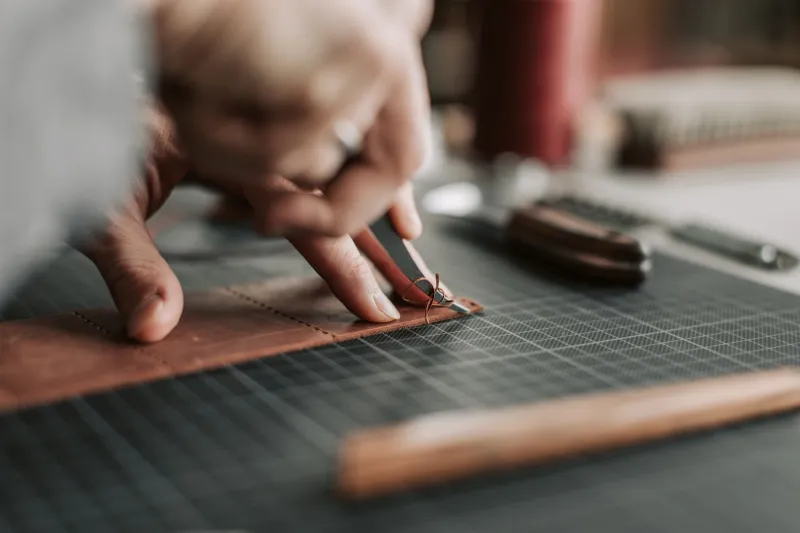
The weekend introduces texture back into a week dominated by smooth finishes. A belt with visible craft — weaving, hand-burnished edges — carries the Ginza appreciation for the maker's hand into casual territory. It does the work that logos are asked to do, without asking for attention.
Sunday: The Return to Nothing
The piece: a single fine bracelet, worn alone.
The week closes where Japanese dressing often begins: with restraint. One slim bracelet, everything else left off. Sunday's minimalism is not absence but punctuation — the pause that makes Monday's structured statement land again.
The Arithmetic of Intention
Seven pieces, seven days, and not one morning of deliberation. The system works because each pairing has a reason attached, and reasons, unlike moods, are reliable at 7 a.m. This is the quieter lesson of Ginza style: elegance is less about what you own than about knowing, in advance, exactly what each thing is for.